martes, 13 de diciembre de 2016

encontrarse. Ego.

Para los apasionados del alma humana y del espíritu universal es bueno tener en cuenta que el mayor de los enemigos es un ego espiritualizado. Una vida plena y en paz requiere de un proceso de transformación personal. Uno va dejando de ser como es para convertirse en lo que quiere ser, integrando en su vida esa dimensión del “conócete a ti mismo”. Uno anda a su encuentro, allá en lo más profundo. La paradoja consiste en que para encontrarse se necesita del otro, se precisan espejos que muestren cuál es la realidad que estamos experimentando. Se requiere una manera de vivir, de relacionarse con el mundo y los demás

Dicho de otro modo, hay que salir de uno mismo, descentrarse, para desvelar lo que pueda existir más allá de nuestras programaciones mentales y emocionales. Quienes lo logran son los que se asientan en el silencio o la contemplación, los que se entregan a un arte, los que se dan a los demás. En cada caso hay un olvido de sí mismo para que penetre el bien, lo bello y lo verdadero. Es eso lo que buscamos con tanto ahínco. En resumen: descentrarse para encontrarse.

Fuente: http://elpais.com/elpais/2016/03/10/eps/1457631066_854651.html


Calle

Raíles cruzados son tus caminos complicados que toca elegir, sin filtros ni perdones, palabras claras sin borrones te soplan ve, déjate llevar y conócete. Quizás descubras alguna plaza angulada, una nueva esquina en tu vida, una cosa canija que saca esa sonrisa al final del dia, jugando a verbos: poder, creer, querer, ver. Puede que haya más caídas que salidas triunfantes, pero esa es la vida. Hay que andar, firme y sin medias, con los ojos puestos en esa cosa canija que te saca sonrisas, y hombros, y heridas, infinitas caidas que para qué. Para que sepas levantarte, porque si lo haces, la vida es tuya. Bajo tu control en este descontrol de raíles cruzados y caminos complicados por los que hay que pasar. Aprendiendo a vivir.

sábado, 20 de febrero de 2016

transmutation

Interesting article from Pema Chödrön.
It says:
[...]
There is nothing wrong with negativity per se; the problem is that we never see it, we never honor it, we never get to know it. Instead, we are always trying to get rid of it by punching someone in the face, by slandering someone, by punishing ourselves, or by repressing our feelings. 

The transmutation comes from the willingness to hold our seat with the feeling, to let the words go, to let the justification go. We don’t have to have resolution. We can live with a dissonant note; we don’t have to play the next key to end the tune. 

y trying to get rid of “negativity" we are throwing away our wisdom as well, because everything in us is creative energy—particularly our strong emotions.

[...]

We seek happiness by believing that whole parts of what it is to be human are unacceptable. We feel that something has to change in ourselves. However, unconditional joy comes about through some kind of intelligence in which we allow ourselves to see clearly what we do with great honesty, combined with a tremendous kindness and gentleness. This combination of honesty, or clear-seeing, and kindness is the essence of maitri—unconditional friendship with ourselves.
This is a process of continually stepping into unknown territory. You become willing to step into the unknown territory of your own being. Then you realize that this particular adventure is not only taking you into your own being, it’s also taking you out into the whole universe. You can only go into the unknown when you have made friends with yourself. You can only step into those areas “out there” by beginning to explore and have curiosity about this unknown “in here,” in yourself.
[...]
The notion of self-cherishing refers to the erroneous belief that there could be only comfort and no discomfort, or the belief that there could be only happiness and no sadness, or the belief that there could be just good and no bad. Classifications of good and bad come from lack of maitri.

 Things are changing now around me. And I think It's cause I'm changing. And I smile :)


domingo, 3 de enero de 2016

Lignes

Ecrits théoretiques sur l'art de Kandiski qui servent d'inspiration à un projet du snowboard intéressant:

Les analyses de Kandinsky sur les formes et sur les couleurs ne résultent pas de simples associations d’idées arbitraires, mais de l’expérience intérieure du peintre qui a passé des années à créer des peintures abstraites d’une incroyable richesse sensorielle.

Point ligne Plan

Deuxième ouvrage publié en 1926, quand Kandinsky est professeur au Bauhaus. L'artiste y analyse les éléments géométriques qui composent toute peinture, à savoir le point et le ligne, ainsi que le support physique et la surface matérielle sur laquelle l’artiste dessine.

[...]


La ligne est le produit d’une force, elle est un point sur lequel une force vivante s’est exercée dans une certaine direction, la force exercée sur le crayon ou sur le pinceau par la main de l’artiste. Les formes linéaires produites peuvent être de plusieurs types : une ligne droite qui résulte d’une force unique exercée dans une seule direction, une ligne brisée qui résulte de l’alternance de deux forces possédant des directions différentes, ou bien une ligne courbe ou ondulée produite par l’effet de deux forces qui agissent simultanément. Une surface peut être obtenue par densification, à partir d’une ligne que l’on fait pivoter autour d’une de ses extrémités.

Le plan originel est en général rectangulaire ou carré, il est donc composé de lignes horizontales et verticales qui le délimitent et qui le définissent comme un être autonome qui va servir de support à la peinture en lui communiquant sa tonalité affective. Cette tonalité est déterminée par l’importance relative de ces lignes horizontales et verticales, les horizontales donnant une tonalité calme et froide au plan originel, tandis que les verticales lui communique une tonalité calme et chaude. L’artiste possède l’intuition de cet effet intérieur du format de la toile et de ses dimensions, qu’il va choisir en fonction de la tonalité qu’il souhaite donner à son œuvre. Kandinsky considère même le plan originel comme un être vivant que l’artiste « féconde » et dont il sent la « respiration ».

Alors, traduction:

La ligne est le produit d'une passion, elle est un point sur lequel un rider s'est exercée dans une certaine direction, la force exercée sur la neige par la board. Les formes linéaires produites peuvent être de plusieurs types: une ligne droite qui résulte d'une force unique exerée dans ne seule direction, une ligne brisée qui résulte de la torsion ou l'alternance de deux forces sur les pieds, ou bien une ligne courbe ou ondulée produite par l'effeet de la conduction du rider.

Le plan originel est en général la montagne, il est donc composé de lignes horizontales et verticales qui le délimitent et qui le définissent comme un êtreautonome qui va servir de support au rider en lui communiquant son style. Ce style est déterminée par l’importance relative de ces lignes horizontales et verticales, les horizontales donnant une tonalité calme et froide, la vitesse, tandis que les verticales lui communique une tonalité calme et chaude, le trick. Le rider possède l’intuition de cet effet intérieur du format de la board et de ses dimensions, qu’il va choisir en fonction du style qu’il souhaite donner à son riding. Kandinsky considère même le plan originel comme un être vivant que le rider « féconde » et dont il sent la « respiration »

Ce projet comporte une multitude d’exemples photographiques qui offrent la démonstration de ses observations théoriques, et qui permettent au lecteur d’en reproduire en lui l’évidence intérieure pour peu qu’il prenne le temps de regarder avec attention chacune de ces images, qu’il les laisse agir sur sa propre sensibilité et qu’il laisse vibrer les cordes sensibles de son âme et de son esprit.

  « Pour ce genre d'expérience, il vaut mieux se fier à la première impression, car la sensibilité se lasse vite et cède le champ à l'imagination. »

 ça peut être LINES ;)

jueves, 5 de noviembre de 2015

pensamientos

Hoy de noche a unas 23:58 horas, recién duchada, recién llegada de una sesión de skate post-snow con necesidad de aire fresco, velocidad y sudor. Mucho snowboard tampoco es bueno. Semi-frustración con final feliz.

Mi cabeza está tan cansada que piensa a cortes:

Backstreet boys molan


Ayer fue el cumple de Mary y la acabo de felicitar, ups. Me hace recordar una canción olvidada, forever young


Youth's like diamonds in the sun, and diamonds are forever.
Hoping for the best, but expecting the worst, are you gonna drop the bomb or not?

Y reflexiones que todavía no llegan a nada. Intento focalizar, pero mucho de una cosa tampoco es bueno.

Y me la tabla me complica, necesito sencillez. 

Aprendiendo a tocar la armónica en la góndola. 40 minutillos al día, no está mal.


domingo, 16 de agosto de 2015

workshop


aktiv                                                                                                                                             
anspruchvoll
aufrichtig

beharrlich
dickköpfig
dünn
empfindlich
energisch
flink
froh
genau
gesellig
geund
hart
impulsiv
kritisch
launisch
lebhaft
leichtsinnig
misstrauisch
mutig
 nachdenklich
reserviert
ruhig
spontan
stolz
unentschlossen
unvereingenommen
zerstreut
zuvorkommend
sensibel

"Wort, das ein Wesen oder Ding, ein Geschehen, eine Eigenschaft oder einen Umstand als mit einem bestimmten Merkmal, mit einer bestimmten Eigenschaft versehen kennzeichnet."

Schritt um Schritt und Geduld.


domingo, 9 de agosto de 2015

Rorschach Test


This guy in the picture, gifted and handsome by the way, invented a psychological test in which subjects' perceptions of  ten inkblots were recorded and analyzed in order to examine one's personality and try to detect thought disorders. It was the most widely used test in the 60's.

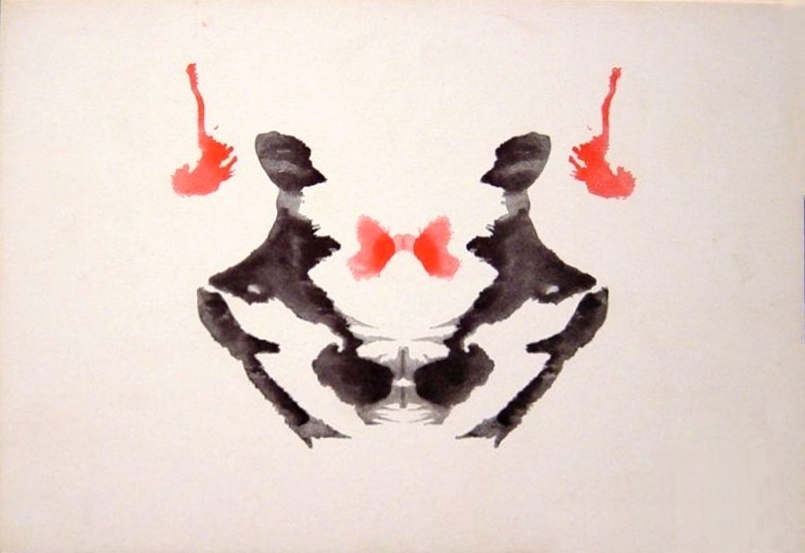
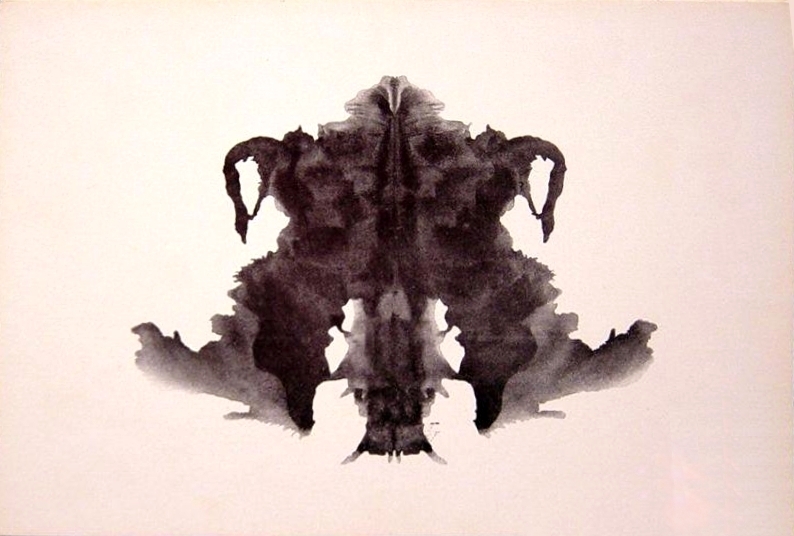
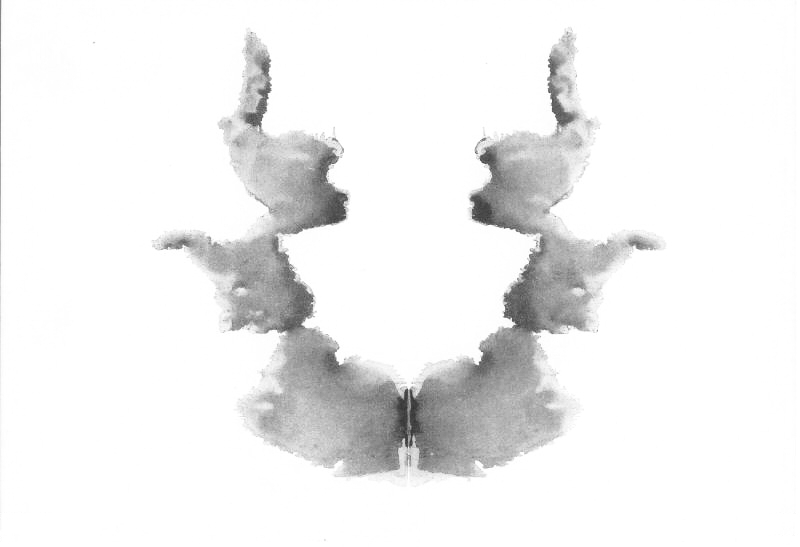
So, I was curious, I did the test first and tried then to understand how could this be related to my personality. I did some research, but actually there are so many theories behind - the one most extended being developped by a doctor called Exner, 256 pages long - that I decided to take it easy and draw my own conclusions. Take a look at the pictures and give them a quick thought, you might end up with interesting conclusions.


Sunday and Elliot Smith in the background.


1


. I see a bat with two small hands trying to grab something.

2


I see two guys clapping their hands; red symbolizing energy, this means, their knees, face, back, lumbs and stomach are warm, they give off energy.

3


I see two people cooking in a pan, with their hearts off their bodies and their lumbs flying besides their heads.

4


I see a monster with its face and legs in the same horizontal position. It stares at me and it seems it has just halted. It looks angry and ready to bite me.

5


A sweet bat with long ears laying backwards.

6


I see a sporty person's backbone with its back muscles and skin around. I see the prolongation of the spine towards the neck as well and the corresponding muscle fibers on the top, which seem to be tight or maybe broken. 

7


I see two girls dancing together face to face with their ponytails on the air and fluffy skirts.


8


I see two bears trying to climb a mountain. Red means low, means earth, ground; blue means high, means mountain, sky. It seems they are climbing from heaven to hell :p

9


I see a kiss of two rhinos with squashy noses, extravagant foreheads and a bit too short horns. No clue about the pink thing, might be that love is in the air...

10


Two guys hand in hand grabbing each one a crab and looking towards somehting . Their heads are gray, their body is pink and the yellow and gray thing seem like a kind of marin animal trying to bite their ass. It looks like they are in the watter and they are gazing at something which might be a sort of escape.